
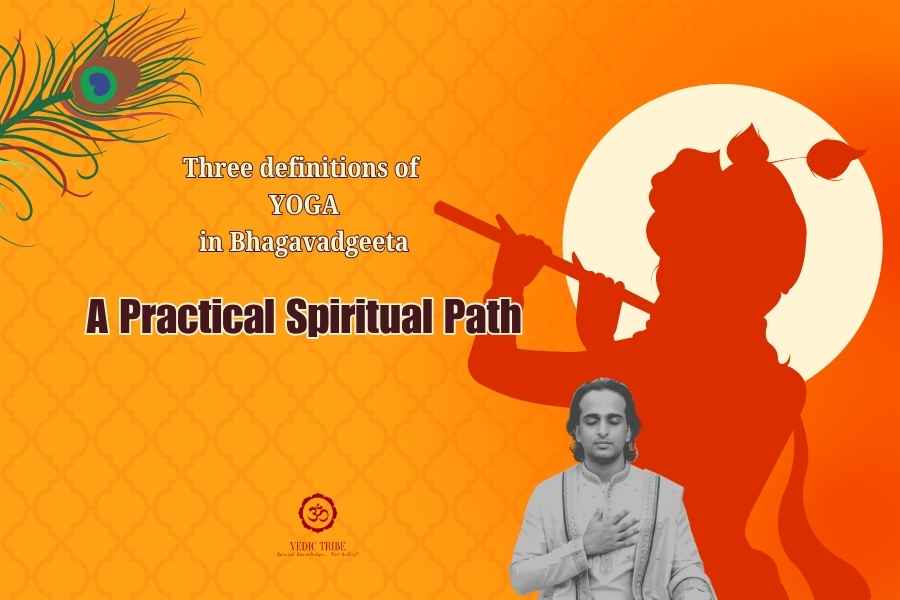
In the modern world, the word Yoga almost instantly brings to mind images of physical postures (asanas), flexible bodies, fancy meditative techniques, or the pursuit of mystical powers like kundalini awakening. While these aspects have gained widespread popularity, they capture only a tiny fraction of what the ancient seers originally envisioned.
Ancient Yoga was never intended to be confined to physical exercise or isolated asceticism. At its root, it is practical spirituality—a grounded, actionable blueprint for living consciously amid the chaos and responsibilities of everyday life.
A Concept Older Than Patanjali
When scholars and practitioners are asked to define Yoga, they frequently cite Maharshi Patanjali’s famous definition from the Yoga Sutras:
“Yogas chitta vritti nirodha”
(Yoga is the cessation of the mental fluctuations.)
While Patanjali brilliantly structured and systematized the philosophy of Yoga centuries later into an eight-limbed path (Ashtanga Yoga), the origin of the word itself traces back much further into antiquity.
The earliest recorded occurrence of “Yoga” is found in the ancient Rigveda (Hymn 5.81.1). Derived from the Sanskrit root yuj—meaning “to yoke,” “to join,” or “to harness”—the term was originally used in the context of yoking horses to a chariot. Metaphorically, this represented the disciplined harnessing, direction, and control of one’s mind, senses, and vital energy toward a higher cosmic purpose. Rather than seeking escape from the world, Vedic Yoga emphasized mastering one’s internal faculties to act effectively and align with truth.
The Bhagavad Gita: The Ultimate Manual of Practical Spirituality
Long before formalized modern practices or physical schools emerged, Lord Krishna presented the ultimate framework of practical spirituality in the Bhagavad Gita.
Set not in a quiet forest or a secluded monastery, but right in the middle of a battlefield, the Gita delivers wisdom directly where life is most demanding. Lord Krishna demystifies Yoga, shifting it away from abstract metaphysical theories and transforming it into a liveable philosophy. He defines Yoga through functional, real-world mental orientations—teaching us how to maintain inner balance, perform our duties without self-centered attachment, and achieve excellence in action.
Whether you are a leader, a working professional, a parent, or a seeker, the Gita’s teachings provide an internal anchor for navigating everyday challenges with clarity and grace.
Join Vedic Tribe on This Journey
To help us reconnect with this authentic, life-transforming heritage, Vedic Tribe is delighted to introduce three fundamental definitions of Yoga as revealed by Lord Krishna in the Bhagavad Gita.
In our upcoming post, we will explore the very first definition: Yoga as Equanimity of Mind (Samatvam Yoga Uchyate).
We hope this introductory series sparks your curiosity to dive deeper into the timeless wisdom of the Bhagavad Gita and apply its practical spiritual insights to your everyday life.
Madhwesh K
Vedic Tribe