
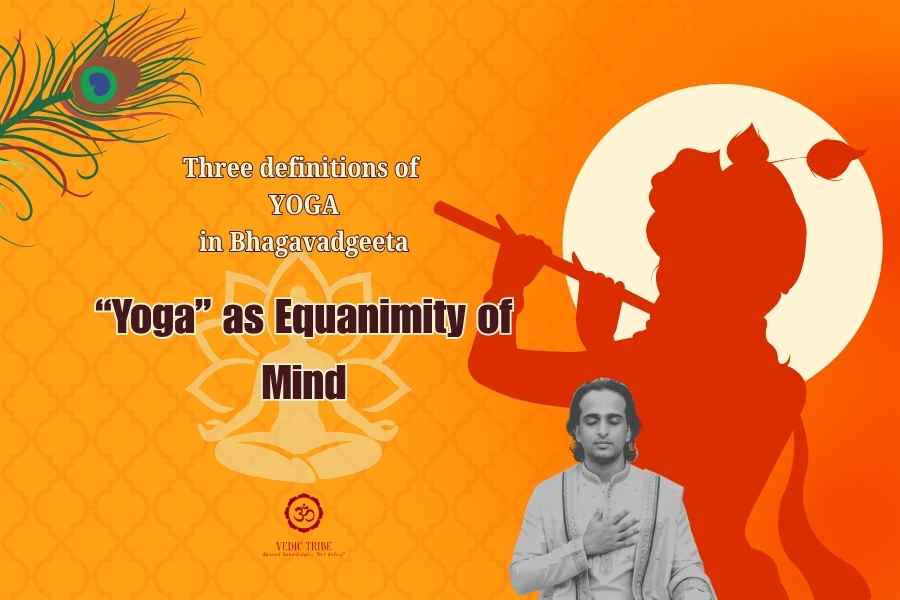
When we think of Yoga today, we often imagine twisting our bodies into complex poses or sitting cross-legged in silent meditation. But as we explored in our introduction, the ancient vision of Yoga extends far beyond physical postures or mystical feats. It is, above all, a system of practical spirituality designed to master the inner landscape of daily life.
In the second chapter of the Bhagavad Gita (Verse 2.48), Lord Krishna reveals the first profound definition of Yoga:
samatvaṁ yoga ucyate
“Be steadfast in Yoga, performing your duty without attachment, remaining equal-minded in both success and failure. Such equanimity is called Yoga.”
The Rollercoaster of Daily Life
Every single day, we face a continuous stream of outcomes—some big, some small. A project succeeds, or an unexpected delay occurs. A conversation goes smoothly, or a disagreement erupts.
With every passing moment, our minds naturally sway between joy and distress, pride and regret, enthusiasm and despair. This constant swinging of the mental pendulum drains our vitality and clouds our clarity.
Staying calm when things go our way is easy; remaining poised when plans fall apart seems nearly impossible. Lord Krishna teaches that true Yoga is not about changing the external world to suit us, but developing an unshakable inner poise—equanimity of mind—regardless of what unfolds around us.
The Three Pillar Convictions of a Calm Mind
Equanimity cannot be forced through mere willpower or positive thinking. It requires deep intellectual conviction—a shift in how we interpret life’s ups and downs.
Lord Krishna’s teachings offer three fundamental mental convictions that anchor the mind:
- The Law of Cause and Effect (Karma): Understanding that our present experience—whether pleasant or challenging—is the natural result of past actions and choices. Accepting this removes helplessness and shifts our focus toward conscious action in the present.
- The Impermanence of Everything: Realizing that no condition, success, or failure lasts forever. Joy passes, and so does sorrow. Remembering that “this too shall pass” prevents us from clinging tightly to wins or being crushed by losses.
- The Grand Cosmic Perspective: Recognizing that our individual struggles and triumphs are just a tiny thread in the vast canvas of cosmic consciousness. This perspective softens the ego and restores a sense of peace.
Becoming a Yogi in Daily Life
When these three convictions are remembered and observed in real-time—during a tough day at work, a personal setback, or a moment of praise—a transformation occurs.
You no longer need to retreat to a cave or stand on your head to practice Yoga. In that very moment of remaining balanced and steady, you become a Yogi.
Yoga is not just what you do on a mat; it is the mental strength you carry into the world.
Stay tuned for our series as we dive deeper into Lord Krishna’s second definition of Yoga in the Bhagavad Gita!
Madhwesh K
Vedic Tribe