
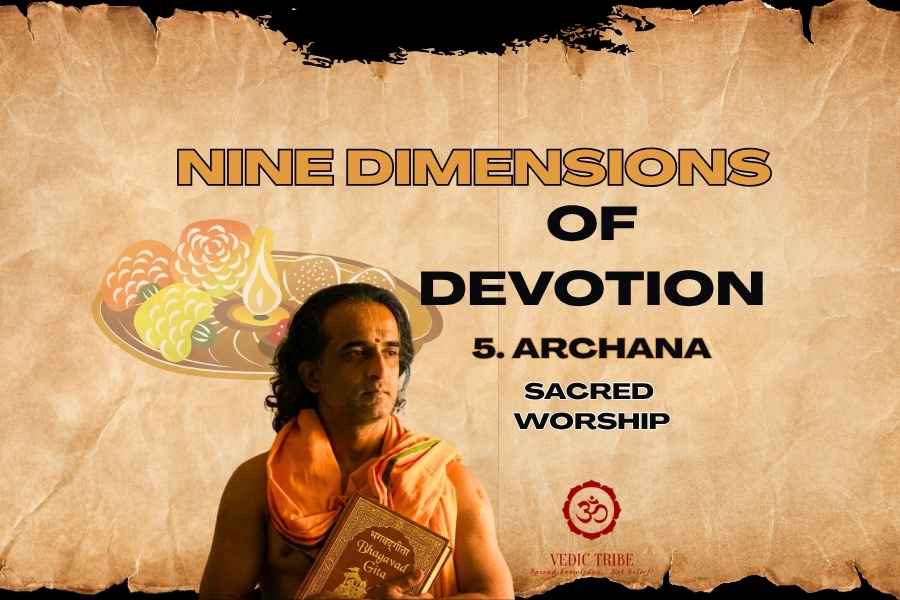
Having journeyed through Shravana (listening), Kirtana (chanting), Smarana (contemplation), and Pada Sevana (active service), we reach the focal point where sacred symbolism, physical discipline, and Vedic principles unite: Archana (अर्चन)—the fifth dimension of Navadha Bhakti.
In modern times, ritualistic worship is sometimes misunderstood as mere outward routine or blind dogma. However, when understood through the lens of Indian spiritual tradition, Archana is a sophisticated, sensory-rich technology of practical spirituality. It provides structure, sensory alignment, and mental focus in an increasingly chaotic world.
What is Archana?
The Sanskrit term अर्चन (Archana) comes from the root arch (अर्च्), which means “to honor, praise, or worship.”
In the Vedic and Bhagavata traditions, Archana refers to formal, ritualistic worship of the Supreme Being through consecrated forms (murtis), sacred symbols, or fire rituals (havan/yajna). It involves offering specific items—such as water, flowers, incense, light (aarti), and food (naivedya)—accompanied by precise Vedic mantras and intent.
While Smarana is subtle and internal, Archana is tangible and external. It takes abstract spiritual ideals and grounds them into physical, everyday reality.
Why Structured Worship Matters Today?
Our minds are heavily influenced by sensory inputs—what we see, touch, smell, hear, and taste. Modern life floods these senses with continuous, unstructured stimulation, leading to restlessness and mental fatigue. Archana works by systematically engaging all five senses to anchor the wandering mind:
- Sensory Alignment: Lighting a lamp (visual focus), ringing a bell (auditory resonance), burning incense (olfactory soothing), offering fresh flowers (tactile beauty), and offering prasad (taste) draw all sensory channels into a single point of concentration.
- Cultivating Daily Discipline: Just as physical exercise requires a structured regimen, spiritual strength requires daily discipline. A short, consistent ritual creates order, rhythm, and stability in our domestic life.
- Sacred Geometry and Energy: Vedic scriptures outline specific procedures for Archana to optimize spatial energy, invoking a palpable atmosphere of peace and sacredness in the home.
Archana demonstrates that ritual is not blind superstition—it is intentional design to elevate human consciousness.
Forms of Archana Practice
Depending on capacity, time, and tradition, Archana can range from simple daily offerings to elaborate ceremonies:
- Pancha Upachara (Five-Fold Offering): Offering five basic elements—Gandha (sandalwood/earth), Pushpa (flowers/ether), Dhupa (incense/air), Dipa (lamp/fire), and Naivedya (food/water).
- Shodasha Upachara (Sixteen-Fold Offering): A detailed Vedic ritual treating the Divine presence as a revered, beloved royal guest—offering welcoming water, seat, bath, clothing, ornaments, meals, and reverence.
- Manasa Archana (Internal Worship): Performing the entire ritual mentally with intense visualization when physical materials are unavailable.
Practical Ways to Incorporate Archana Today
You do not need hours of elaborate rituals to benefit from Archana. In a busy modern life, consistency and sincerity matter far more than duration:
- Create a Dedicated Sacred Corner: Maintain a clean, quiet space in your home with a simple lamp, idol, or framed image to serve as an anchor for mental peace.
- The 5-Minute Daily Lighting: Every morning or evening, light a single diya (lamp) or incense stick, offer a flower or fresh water, and recite a favorite mantra or prayer.
- Mindful Offerings: Offer your morning meal or water mentally to the Supreme before consuming it, turning everyday nourishment into Prasad.
Exemplar of Archana
In sacred literature, King Ambarisha is celebrated as the master of Archana. Though he governed a vast empire, Ambarisha personally cleaned the temple, gathered flowers, and performed worship with complete devotion. His dedication to ritual discipline granted him extraordinary mental fortitude, unwavering clarity, and divine protection in times of crisis.
What Comes Next?
Archana brings sacred order to our physical actions and sensory environment. As ritual worship softens the ego and deepens our reverence, it leads naturally to total physical and mental surrender: Vandana (वंदन)—the Sixth Dimension of Devotion.
At Vedic Tribe, we encourage you to practice Archana this week. Take five minutes each day to light a lamp with intention and feel how structured worship settles the mind.
In our next article, we will explore Vandana (The Art and Humility of Prostration)—how physical humility dissolves stress and pride.
Madhwesh K
Vedic Tribe