
In an era defined by relentless pace, digital burnout, and constant noise, humanity is increasingly seeking grounding, inner peace, and purpose.
Modern self-help frameworks offer temporary fixes, but our timeless tradition offers easy answers. This has been part of the Indian spiritual tradition for millennia.
Far from being an outdated relic of the past, Indian spirituality is a dynamic, living philosophy—a system of practical spirituality that is as vital today as it ever was.
At the heart of this practical path lies the concept of Bhakti (Devotion).
What is Bhakti?
To truly appreciate Bhakti, we must look at its linguistic and philosophical roots in Sanskrit:
- भंज् (Bhanj): Meaning “to break.” Bhakti is the intentional breaking of our unhealthy attachments to worldly anxieties, ego, and fleeting material distractions.
- भज् (Bhaj): Meaning “to serve, share, or worship.” It signifies redirecting our focus, love, and reverence toward the Supreme Consciousness.
Thus, Bhakti is not a passive emotion; it is an active transformation. In the Srimad Bhagavatam, Bhakti is described as a ceaseless torrent of love—an uninterrupted flow of consciousness toward the divine, much like a river flowing naturally toward the ocean.
Navadha Bhakti: The Nine Dimensions of Practical Spirituality
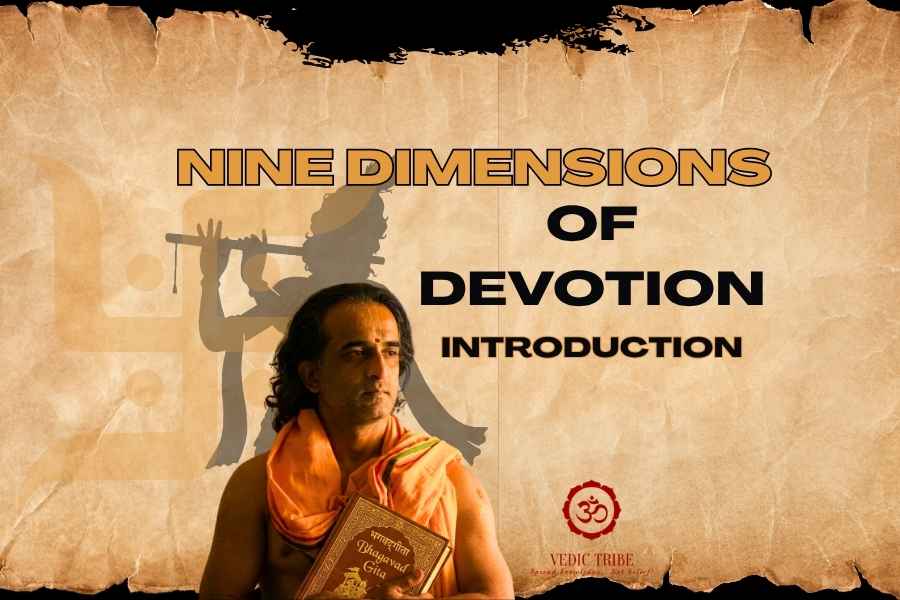
The Bhagavata tradition outlines nine distinct, accessible pathways to practice devotion. Known as Navadha Bhakti, these nine dimensions cater to different human temperaments, mindsets, and lifestyle needs:
- श्रवण (Shravana) – Deep Listening: Immersing oneself in listening to elevated spiritual wisdom, sacred stories, and divine attributes. In a world full of digital noise, Shravana is the practice of conscious auditory intake.
- कीर्तन (Kirtana) – Expressive Chanting: Singing or reciting the divine names and qualities. Science now confirms that rhythmic chanting releases endorphins, reduces stress, and aligns brainwaves.
- स्मरण (Smarana) – Mindful Contemplation: Keeping the divine presence at the forefront of the mind throughout daily life, turning routine work into active mindfulness.
- पादसेवन (Pada Sevana) – Humble Service: Serving the divine through compassionate action, helping others, and honoring sacred creation.
- अर्चन (Archana) – Structured Worship: Engaging in ritualistic worship as prescribed by Vedic scriptures, bringing discipline, order, and sensory focus to spiritual practice.
- वंदन (Vandana) – Prostration & Reverence: Bowing down physically and mentally, melting away the ego and cultivating genuine humility.
- दास्य (Dasya) – Devoted Alignment: Cultivating the attitude of a dedicated servant, aligning one’s personal will with the higher divine will.
- सख्य (Sakhya) – Sacred Friendship: Relating to the Almighty as an intimately trusted friend—sharing fears, joys, and thoughts without hesitation or fear.
- आत्म निवेदन (Atma Nivedana) – Complete Self-Surrender: The ultimate state of devotion—offering one’s body, mind, and soul to the Divine, leading to absolute peace and liberation.
Why Practical Spirituality Matters Today
Many view spirituality as something reserved for retirement or formal rituals. However, Navadha Bhakti proves that Indian spirituality is designed for everyday life. Whether you are a student, professional, parent, or leader, these nine pathways provide a structured methodology to master your internal state while excelling in the external world.
By integrating these practices, we shift from living out of anxiety and ego to living out of purpose, compassion, and stability.
Join Us on This Journey
At Vedic Tribe, our mission is to reignite curiosity about our profound heritage and empower you to integrate these timeless truths into modern living.
We are excited to launch an exclusive series breaking down each of these nine paths in detail. In our next article, we will explore the foundational first dimension: Shravana (The Art and Science of Spiritual Listening)—how what we listen to shapes who we become.
Stay tuned, explore with an open mind, and discover the transformative power of practical spirituality!
Madhwesh K
Vedic Tribe